


When you wake up with a dull, throbbing headache, you might blame it on stress or a bad night’s sleep, but the source of your discomfort could actually be your teeth. There is a strong connection between grinding your teeth at night and experiencing frequent headaches.
When you clench or grind your jaw, it puts significant strain on the muscles in your face, head, and neck, which can lead to persistent headaches. This constant tension is often the hidden reason for head pain that seems to appear without a clear cause and can be related to TMJ discomfort, especially in the morning.
The Link Between Teeth Grinding and Headaches
Your chewing muscles are incredibly powerful. When you unconsciously overwork them by grinding your teeth at night, that tension has to go somewhere. It can radiate outward from your jaw, causing pain that feels just like a tension headache. This condition, known as bruxism, doesn’t just affect your muscles. It also puts a strain on your temporomandibular joint (TMJ).
The TMJ is the joint that connects your jaw to your skull. When this joint is irritated, it can contribute to jaw soreness, earache-like pain, and even trigger more intense headaches.
The pain you feel is often a tension-type headache, characterized by a dull, aching sensation on both sides of your head. Unlike a migraine, it doesn’t always come with nausea or light sensitivity, but it can be just as disruptive to your day. This consistent muscle strain is why you might wake up feeling like you have a tight band wrapped around your head.
How to Know if You Grind Your Teeth
Since most teeth grinding happens while you’re asleep, you might not even know you’re doing it. Your body, however, often provides clues that something is happening overnight. A dentist can also spot subtle signs of grinding during a routine teeth cleaning that you might not see yourself.
Common signs of teeth grinding include:
- A dull, constant headache or sore jaw when you wake up
- Pain that feels like an earache, even without an ear problem
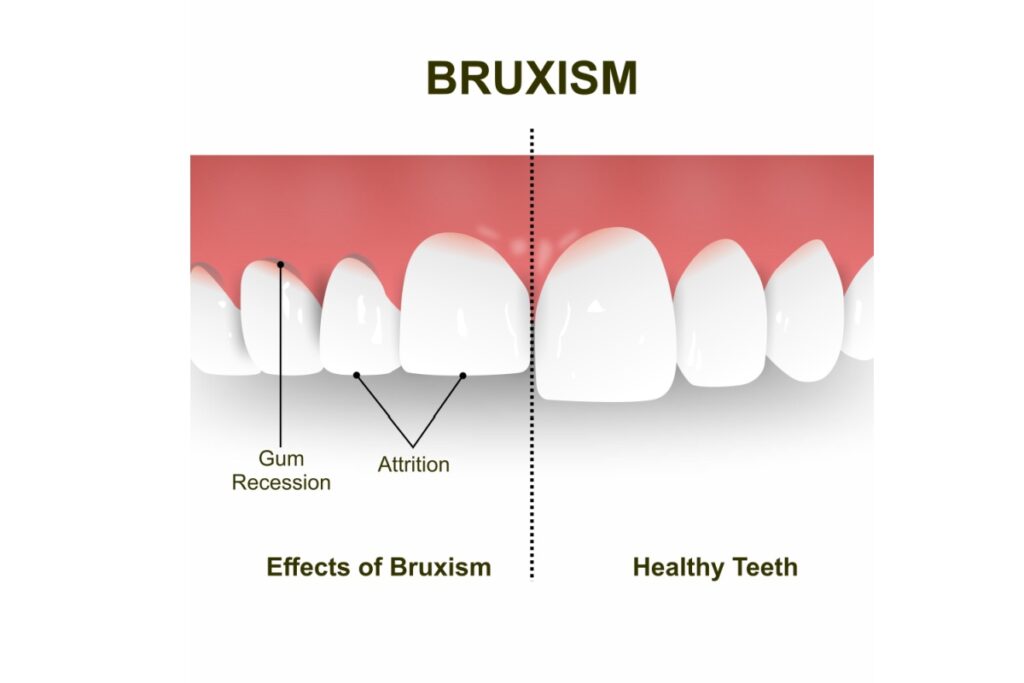
- Teeth that appear flattened, fractured, or chipped
- Increased tooth sensitivity to hot or cold temperatures
- Jaw muscles that feel tired, tight, or overworked
What Causes Teeth Grinding?
Several factors can contribute to why you grind your teeth, and the reason is different for everyone. Common triggers are often linked to your lifestyle, stress levels, and even the natural alignment of your teeth.
Stress and Anxiety
For many people, daily stress and anxiety are frequent causes of teeth grinding. When your body is under stress, it can lead to unconscious clenching during the day or grinding at night as your muscles hold onto that tension.
Bite and Alignment Issues
Sometimes, the way your upper and lower teeth fit together can contribute to the habit. If you have crooked teeth or a misaligned bite, your jaw may shift into a grinding motion more easily. In these situations, solutions like clear aligners such as Candid Pro or Invisalign can be part of a long-term plan to help your jaw rest more comfortably.
Sleep Patterns and Lifestyle Choices
Your sleep habits can also play a role. Grinding is often associated with other sleep disorders, such as sleep apnea. Additionally, lifestyle choices like caffeine or alcohol consumption can sometimes make teeth grinding worse. A dentist can help you explore all the possible contributing factors.
How to Manage Grinding and Headaches
You can take steps both at home and with professional support to manage teeth grinding and the headaches it may cause. The main goal is to reduce the strain on your jaw and protect your teeth from damage while you sleep.
Some at-home techniques include:
- Practice relaxation techniques like meditation or a warm bath before bed to calm your mind and muscles.
- Avoid chewing on hard foods, ice, or non-food items like pens or pencils.
- Gently massage your jaw, neck, and face muscles to help relieve built-up tension.
A custom-fitted night guard is a common and effective way to protect your teeth. Unlike over-the-counter options, a professionally made guard fits your unique bite, providing a comfortable cushion. It absorbs the immense pressure from grinding, preventing enamel wear and tear and reducing muscle strain.
If bite alignment is a factor, a dentist can offer orthodontic adjustments to help create a more balanced bite. When grinding has already caused significant damage, you may need restorative work to repair your smile. This can range from crowns to, in severe cases, dental implants to replace a tooth that has been fractured beyond repair.
When to Talk to Your Dentist
If you experience persistent headaches alongside jaw pain, tooth sensitivity, or worn-down teeth, it’s a good idea to schedule a dental visit. Genesis Dental can examine your teeth and jaw to see if grinding is the source of your discomfort. From there, our dental team can discuss personalized options to help protect your smile and relieve your discomfort.
Understanding the cause of your headaches is the first step toward feeling better. Contact us today to schedule an appointment and explore solutions that fit your needs.

