

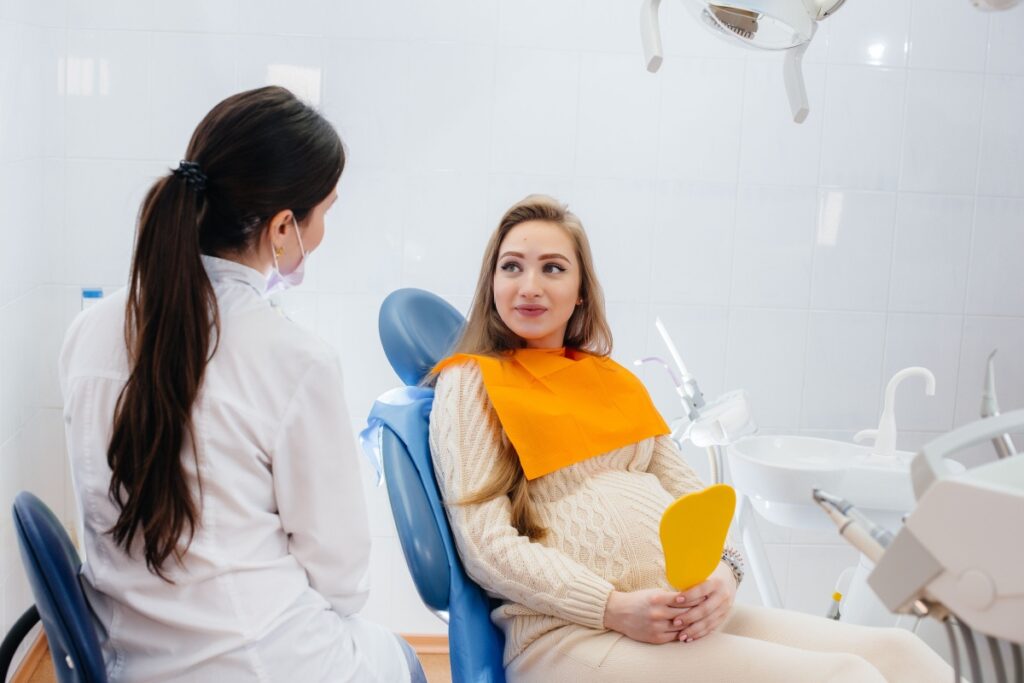
Yes, pregnancy significantly affects your dental health. Hormonal fluctuations—particularly increased progesterone and estrogen—make your gums more sensitive to plaque bacteria, causing inflammation and bleeding even with gentle brushing. These same hormones also increase blood flow to your gum tissue, making it more reactive to irritants.
Beyond hormonal changes, pregnancy creates other conditions that impact your teeth and gums. Morning sickness exposes your teeth to stomach acid that erodes enamel. Dietary changes like frequent snacking, sugar cravings, or grazing throughout the day increase cavity risk.
Most of these effects are temporary and resolve after delivery, but untreated gum inflammation during pregnancy can progress to gum disease that persists postpartum. Understanding what’s normal, what requires treatment, and which dental procedures are safe during each trimester helps you protect both your smile and your baby’s health.
How Pregnancy Hormones & Your Mouth Connect
Pregnancy Gingivitis (Most Common)
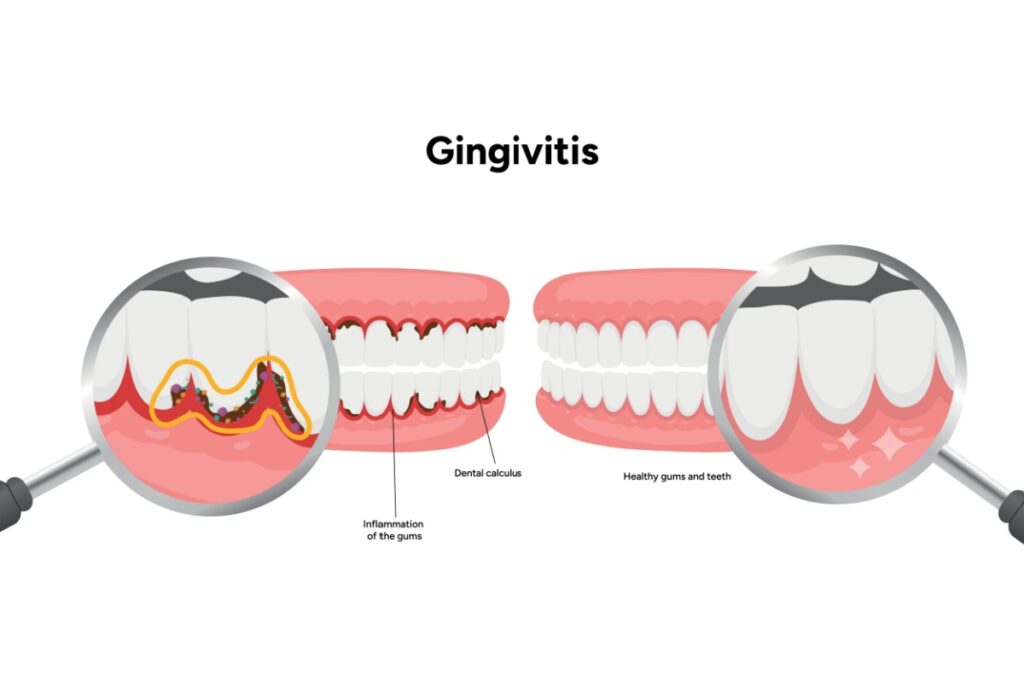
Between 60-75% of pregnant women develop pregnancy gingivitis, typically starting in the second trimester when hormone levels peak. Your gums become swollen, tender, and bleed easily when you brush or floss—even if you had healthy gums before pregnancy.
This happens because progesterone and estrogen increase blood flow to your gums and alter your immune response to plaque bacteria. The same amount of plaque that didn’t bother you before pregnancy now triggers significant inflammation. The good news: pregnancy gingivitis usually resolves after delivery once hormone levels normalize, though you’ll need a professional cleaning and consistent home care to prevent it from progressing to permanent gum disease.
Pregnancy Epulis (Pregnancy “Tumors”)
About 5% of pregnant women develop small, raised, red growths on their gums called pregnancy epulis or pyogenic granulomas. Despite the alarming name “pregnancy tumor,” these are completely harmless, non-cancerous overgrowths of gum tissue caused by hormones and local irritation.
They typically appear between teeth in the second trimester and can bleed easily when brushed. Most shrink and disappear on their own after delivery. If one grows large enough to interfere with eating or becomes bothersome, your dentist can remove it safely during pregnancy.
Other Mouth Changes
Some women notice increased saliva production (ptyalism), which can be uncomfortable but is harmless and resolves postpartum. Others experience dry mouth, which increases cavity risk since saliva helps neutralize acid and wash away food particles. Staying hydrated and chewing sugar-free gum can help stimulate saliva flow if you’re experiencing dryness.
Common Dental Issues & Pregnancy
Tooth Enamel Erosion from Morning Sickness
If you’re experiencing morning sickness, don’t brush your teeth immediately after vomiting. Wait at least 30 minutes. Brushing right away scrubs stomach acid deeper into your softened enamel, causing more damage. Instead, rinse with water or a baking soda solution (1 teaspoon in 1 cup water) to neutralize acid, then brush after 30 minutes.
Increased Cavity Risk
Pregnancy cravings and frequent snacking expose your teeth to constant acid attacks from bacteria. Try to limit snacking to set times, choose tooth-friendly options like cheese or nuts, and rinse with water after eating. If cravings hit at night, brush before bed.
Safe Dental Visits & Treatments
Professional dental care is a safe and important part of prenatal health for both you and your baby.
Routine Care During Pregnancy
It’s a good idea to continue with regular dental exams and professional teeth cleanings during pregnancy. These appointments help manage plaque and address issues like gingivitis before they become more serious. Be sure to let your dentist know that you are expecting.
What About Other Procedures?
If you need a filling or other treatment, your dentist can safely use local anesthetics during pregnancy. For cosmetic or non-urgent procedures like clear aligner treatment, it may be a good idea to discuss the timing with your dental team.
Protect Your Smile While Expecting
Your at-home care routine is your first line of defense during pregnancy. A few key adjustments can help:
- After morning sickness: Rinse with baking soda solution (1 tsp in 1 cup water), then wait 30 minutes before brushing to avoid scrubbing acid into softened enamel
- Use a soft-bristled brush with gentle circular motions, as aggressive brushing damages gum tissue
- Continue flossing daily even if your gums bleed—the bleeding should improve within a week of consistent gentle flossing
Your Dental Health After Delivery
Most pregnancy-related dental changes resolve on their own within a few months postpartum as hormone levels return to normal. Pregnancy gingivitis typically improves, loose teeth firm back up, and pregnancy epulis usually shrinks and disappears.
However, schedule a postpartum dental checkup within 3-6 months after delivery to ensure pregnancy gingivitis hasn’t progressed to permanent gum disease and to address any cavities that developed during pregnancy. If you had significant gum issues during pregnancy or skipped cleanings while expecting, schedule your checkup sooner.
If you have questions about dental care during pregnancy or need to schedule a checkup, contact our team at Genesis Dental in Surrey to book your appointment.

