

You might feel nervous about getting your teeth scaled, especially if you’ve heard that it can damage your enamel. This concern keeps many people from getting the professional cleaning they need, which can lead to bigger dental problems down the road.
Tooth scaling does not remove healthy enamel. Instead, it safely removes hardened tartar and plaque that your regular brushing can’t reach, which actually protects your enamel from acid damage. The professional tools used by our team at Genesis Dental target only the buildup on your teeth, leaving your natural enamel intact and healthier than before. Regular professional cleanings help maintain this protection.
What Happens During Tooth Scaling
How Your Surrey Dentist Removes Tartar & Plaque
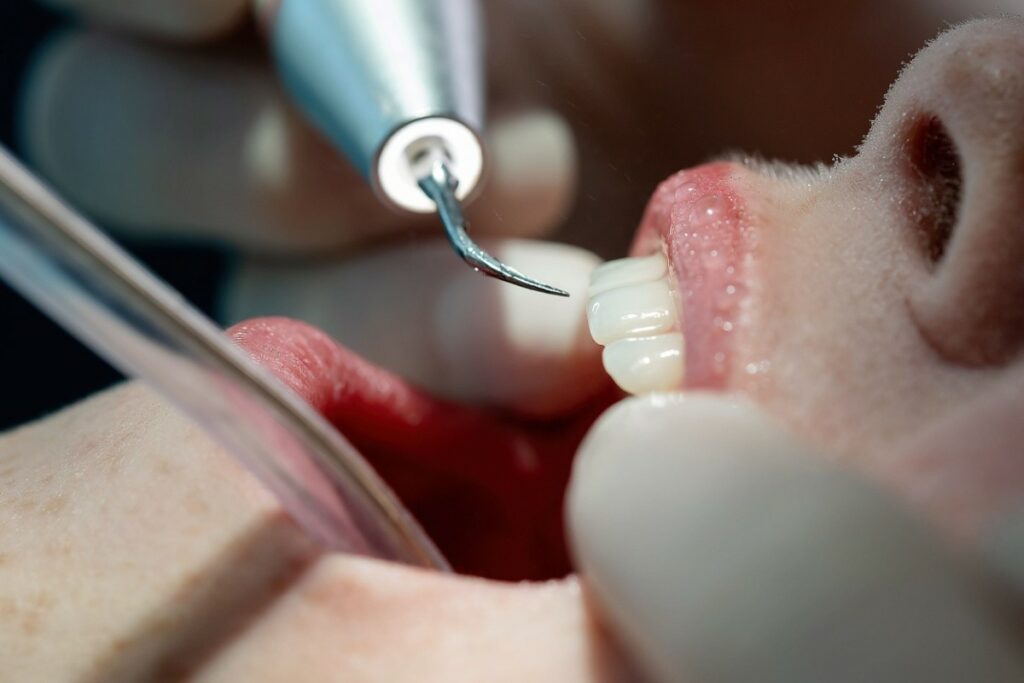
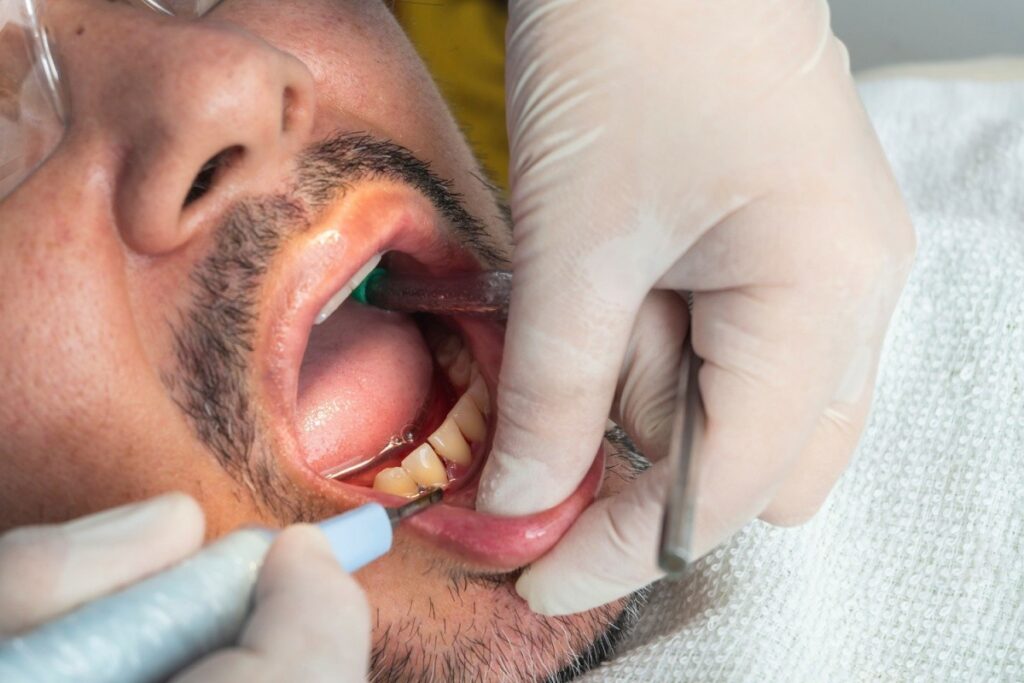
When you sit in the dental chair for scaling, your hygienist uses tools called scalers and curettes to carefully remove hardened deposits from your teeth. These instruments have curved tips designed to follow the natural shape of your teeth and reach below your gumline where tartar likes to hide.
The process involves gentle scraping motions that break away the calcified buildup without touching your actual tooth surface. Many dental offices also use ultrasonic scalers that vibrate at high frequencies, making the tartar easier to remove with less pressure on your teeth.
Why Regular Teeth Cleaning Can’t Remove Hardened Tartar
Your toothbrush and floss work well on soft plaque, but once plaque mineralizes into tartar, it becomes rock-hard and bonds tightly to your teeth. This can happen in as little as 24-72 hours, and it’s common in areas that are frequently missed during brushing, like behind your lower front teeth or around your back molars.
Think of tartar like barnacles on a boat hull, you need dedicated tools to chip them away without damaging what’s underneath. Your daily oral care routine prevents new plaque formation, but can’t reverse tartar that’s already formed.
How Scaling Protects Your Enamel
Tartar Buildup Damages Your Teeth More Than Scaling
Leaving tartar on your teeth causes much more enamel damage than removing it. Here’s what happens when tartar stays on your teeth:
- Bacteria trapped in tartar release acids that weaken enamel
- Tartar creates rough surfaces that trap more plaque
- Gum inflammation affects tooth stability
The acids produced by bacteria living in tartar can create tiny holes in your enamel that eventually become cavities. Scaling stops this process and gives your enamel a chance to remineralize with help from your saliva and fluoride.
Professional Tools Target Tartar, Not Healthy Enamel
Dental scaling instruments work because tartar has a different texture and hardness than your natural enamel. Your hygienist can feel the difference between the rough, chalky tartar and your smooth tooth surface.
Dental tools glide over healthy enamel but catch and remove irregular tartar deposits. This selective removal process means that your natural tooth structure stays protected, while harmful buildup gets eliminated.
Why Your Teeth Feel Different After Teeth Cleaning
Smooth Surfaces After Tartar Removal
Your teeth might feel unusually smooth or even slippery after scaling. This is the natural surface of your teeth! Some people describe this as their tongue not knowing where their teeth are because the familiar rough texture is gone.
You might also notice temporary sensitivity to hot or cold foods. This happens because removing tartar can expose small areas of your tooth root that were previously covered, but it typically fades within a few days.
Your Gums Need Time to Heal
Your gums might feel tender or look slightly swollen after scaling, especially if you had significant tartar buildup. This reaction is normal and shows that your gums are healing from the irritation that tartar was causing.
Most people notice their gums look pinker and feel firmer within a week of professional cleaning. Any minor bleeding should stop as your gum tissue returns to a healthy state.
When Scaling Becomes Necessary for Your Oral Health
Signs You Need Professional Tartar Removal
You can often see and feel when tartar starts building up on your teeth. Watch for these warning signs:
- Visible yellow or brown buildup along gumline
- Bleeding or swollen gums
- Persistent bad breath
- Rough feeling on tooth surfaces
Don’t wait until you notice symptoms to schedule a cleaning. Regular appointments help catch tartar formation before it becomes a bigger problem.
How Often You Should Schedule Professional Cleanings
Most people need professional scaling every six months to maintain optimal oral health. This twice-yearly schedule allows your dental team to remove tartar before it causes significant damage and catch potential problems early.
If you’re prone to heavy tartar buildup, have gum disease, or other risk factors, your dentist might recommend more frequent cleanings every three to four months. Your individual cleaning schedule depends on factors like your oral hygiene habits, medical conditions, and how quickly tartar forms on your teeth.
Treatment Options When Scaling Isn’t Enough
Deep Cleaning for Gum Disease
When tartar extends deep below your gumline, regular scaling might not be sufficient. Root planing, also called deep cleaning or fine scaling, reaches further down the tooth root to remove bacteria and smooth rough spots that attract more tartar.
This treatment typically requires local anesthetic and might be done in sections over multiple visits. Deep cleaning helps your gums reattach to your tooth roots and prevents further bone loss around your teeth.
Ongoing Periodontal Maintenance
After deep cleaning, some patients need periodontal maintenance appointments every 3-4 months instead of standard cleanings. This more frequent schedule is especially important if you have:
- Deep gum pockets that need ongoing monitoring and cleaning
- Bone loss around your teeth from advanced gum disease
- A history of gum disease, which increases your risk of recurrence
- Conditions like diabetes that affect gum healing
- Heavy tartar buildup that forms quickly even with good home care
These specialized appointments focus on keeping gum pockets clean, measuring their depth to track improvement, and preventing future (or further) bone loss. Your hygienist can reach areas that are difficult to clean at home and catch any signs of gum disease returning before it progresses.
Keep Your Smile Bright
Regular scaling protects your enamel and keeps your smile healthy for years to come. If you’re due for a cleaning or have concerns about tartar buildup, our team at Genesis Dental provides gentle, thorough teeth cleaning that leaves your enamel stronger and your gums healthier.
Schedule your appointment today to experience the difference that professional care makes for your oral health.

