

When you get a new dental crown, it should feel comfortable and function just like a natural tooth. It’s a big investment in yourself, so it makes sense that you’d want your crown to be a durable and reliable part of your smile for years to come.
While a dental crown may last for many years, helping to protect your tooth and keeping your smile comfortable, this will be dependent on your homecare and overall health. Several factors, from the material it’s made from to your daily habits, contribute to its longevity.
What Is a Dental Crown?
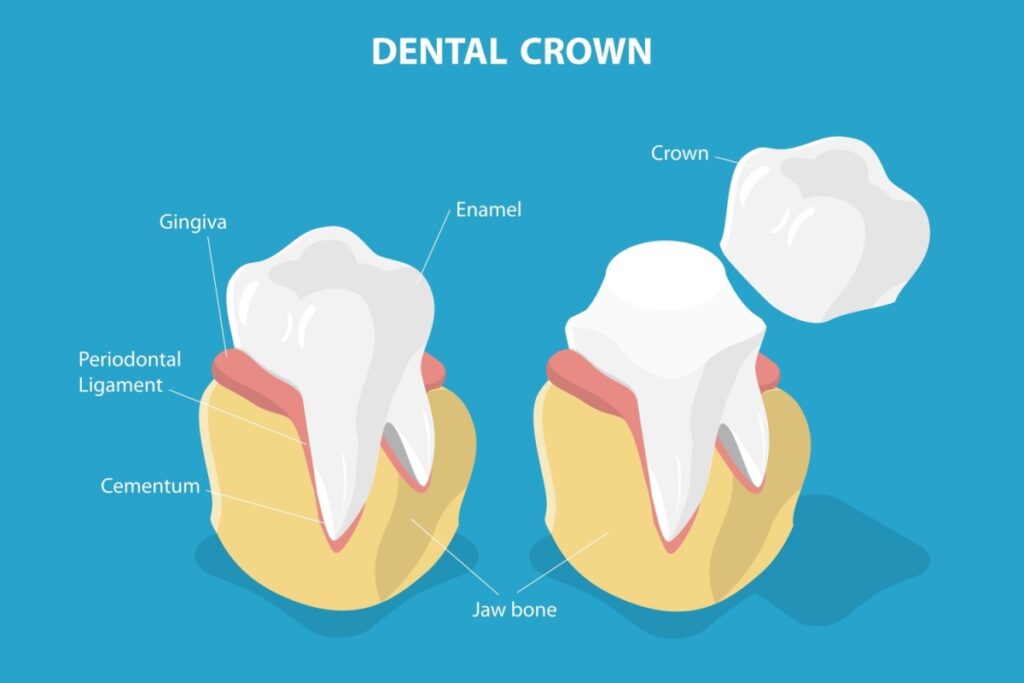
A dental crown is a custom-made cap that fits over your entire tooth down to the gum line. Think of it as a protective cover that restores a tooth’s shape, size, strength, and appearance. You might benefit from a crown for several reasons that involve restoring or protecting a tooth, such as:
- To protect a weak tooth from breaking
- To hold a cracked tooth together
- To restore a broken or severely worn tooth
- To cover and support a tooth with a large filling
- To secure a dental bridge
- To cover a misshapen or discoloured tooth
- To complete a dental implant
Factors That Influence a Crown’s Lifespan
While many crowns last for over a decade, their exact lifespan depends on your unique situation. A few key elements play a significant role in how long your crown continues to protect your tooth effectively, including:
The Material of Your Crown
Crowns come in different materials, with the most common ones being porcelain, ceramic, or metal alloys. Each type has its own strengths. For example, some materials offer a very natural appearance, while others provide exceptional durability for your back molars that handle heavy chewing.
Your Daily Oral Care Routine
A crown needs to be treated just like a natural tooth, so your commitment to brushing and flossing is very important. Good oral hygiene helps prevent decay under the crown, especially around the edges. A healthy tooth provides a strong foundation for a long-lasting restoration.
Habits That Can Affect a Crown
Certain habits can put extra stress on your dental work. Actions like grinding your teeth at night, chewing on ice or hard candy, or using your teeth as tools to open packages can chip or loosen a crown over time. Avoid these habits whenever possible to extend the lifespan of your crown.
How to Care for Your Dental Crown
Proper care helps you get the most out of your dental crown. A few simple habits can significantly extend its longevity and help you avoid complications down the road. Keep these habits in mind:
Daily Brushing & Flossing
Brush your teeth twice a day and floss daily, just as you would with your natural teeth. Pay special attention to the area where the crown meets your gum line, as this is where plaque can easily build up.
Foods to Be Mindful Of
Try to avoid chewing very hard, crunchy, or sticky foods with your crowned tooth. Things like hard nuts, sticky caramels, or ice can potentially damage or dislodge your crown.
Regular Visits for Teeth Cleaning
Professional cleanings keep your teeth and gums healthy around your crown. Routine check-ups also give your dental team a chance to inspect the crown for any signs of wear, damage, or looseness.
Signs You May Need a New Crown
Over time, a crown may show signs that it needs to be replaced. It’s helpful to know what dental warning signs to look for so you can address any issues before they become more complex. Keep watch for:
- Pain or sensitivity: Discomfort when you bite down or new sensitivity to hot or cold temperatures could signal a problem with the crown or the tooth underneath.
- Visible damage: If you notice obvious chips or cracks in the crown, it may no longer be protecting your tooth properly.
- A loose feeling: Your crown should feel secure. If it feels wobbly or loose, it needs attention from your dentist.
- A worn appearance: After years of use, the crown may look worn down from chewing and grinding, affecting your bite.
- Gum line changes: A dark line appearing at the gum line or gums that pull away from the crowned tooth can be a sign that your dentist needs to check the crown.
When Is a Crown the Right Choice?
Dental crowns are a versatile and effective solution, but they are just one of many options for restoring your smile. Your dentist may recommend a crown when the original tooth structure is still present but needs significant support and protection. It effectively reinforces the tooth, allowing you to chew comfortably and smile with confidence.
If you have a missing tooth or a tooth that cannot be saved, a dental implant is another durable option. An implant replaces the entire tooth from root to crown, providing a stable and long-term solution for restoring your smile.
Explore Your Smile Options
Whether you have questions about crowns, implants, need a routine teeth cleaning, or are curious about options like clear aligners, Genesis Dental can help.Your smile deserves care that is tailored to you.
Our team can assess your specific situation and develop a treatment plan tailored to your family’s health needs and personal goals. Contact our office to schedule your consultation today!

