


Seeing blood in the sink after brushing is your body’s way of telling you something’s wrong. While bleeding gums are common, they’re not normal—and they shouldn’t be ignored.
The most frequent cause is plaque buildup along your gumline, which triggers inflammation called gingivitis. Left untreated, gingivitis can progress to more serious gum disease that damages the bone supporting your teeth. Your brushing technique, certain medications, and other health factors can also contribute to bleeding gums.
Common Reasons Your Gums May Bleed
Plaque Buildup & Gingivitis
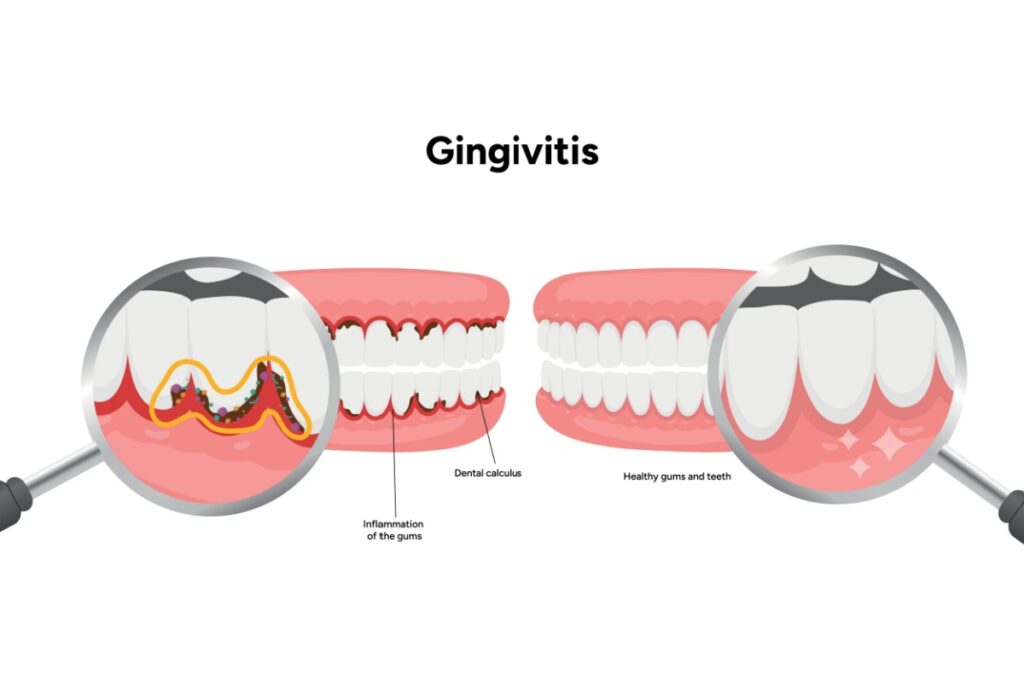
When you notice your gums bleed, it’s often your body’s response to plaque—a sticky film of bacteria that forms along your gumline within 24-48 hours of brushing. If not removed through daily brushing and flossing, this plaque irritates your gums and causes gingivitis, the earliest stage of gum disease.
Gingivitis typically shows up as red, swollen, or tender gums that bleed easily during brushing or flossing. The good news is that gingivitis is reversible with improved oral hygiene and a professional cleaning to remove hardened plaque (tartar) that you can’t remove at home.
Your Toothbrush & Floss Habits
Sometimes the tools you use or the way you use them cause your gums to bleed. Hard-bristle toothbrushes or aggressive brushing scrub away gum tissue rather than plaque, causing damage and bleeding. Dentists recommend soft-bristle brushes used with gentle, circular motions.
If you’ve just started flossing or only floss occasionally, your gums may bleed for the first week or two as they adjust. This should stop within 7-10 days of consistent daily flossing. If bleeding continues beyond two weeks of gentle, daily flossing, it’s likely plaque buildup causing inflammation rather than your technique.
Other Health-Related Factors
Certain medications and health conditions can make your gums more prone to bleeding. Blood thinners like warfarin or aspirin don’t cause gum disease, but they do make gums bleed more easily when inflammation is present. Hormonal changes during pregnancy increase blood flow to your gums, making them more sensitive and reactive to plaque.
What to Do When Your Gums Bleed
Start by switching to a soft-bristle toothbrush if you’re not already using one. Brush for two full minutes twice a day using gentle, circular motions rather than back-and-forth scrubbing. Press just hard enough to feel the bristles against your gums without causing discomfort. You’re removing bacteria, not scrubbing a countertop.
Floss once daily, ideally before bed. Curve the floss around each tooth in a C-shape and gently slide it beneath the gumline, then pull up to remove debris. Don’t snap the floss down into your gums or saw aggressively back and forth.
Rinsing with warm salt water (half teaspoon salt in 8 oz warm water) twice daily can help reduce inflammation and promote healing. Swish for 30 seconds, then spit. An alcohol-free antibacterial mouthwash can also help reduce plaque bacteria, but it shouldn’t replace brushing and flossing, it’s meant to be supplemental.
Foods rich in vitamin C (citrus fruits, bell peppers, strawberries) and crunchy vegetables that stimulate saliva production (carrots, celery, apples) support gum health. Avoid sugary snacks between meals that feed plaque bacteria.
Why You Should Not Ignore Bleeding Gums
Seeing your gums bleed can be a key indicator of your oral health. While it might seem minor, paying attention to this sign helps you stay proactive. Addressing it early can help you avoid more complex issues down the road.
- Can signal the start of gum disease
- Untreated issues can damage supportive bone
- May lead to gum recession or tooth loss
Professional Care for Healthy Gums
The Role of Professional Teeth Cleaning
Even with excellent at-home care, some plaque hardens into tartar (calculus) within 24-48 hours, creating a rough surface that you can’t remove with brushing or flossing alone. Professional teeth cleanings use specialized tools to scrape away this hardened buildup from above and just below your gumline.
For most people with healthy gums, cleanings every 6 months prevent tartar accumulation and keep gingivitis from developing. If you already have gingivitis, a professional cleaning combined with improved home care can reverse the inflammation within 1-2 weeks, returning your gums to health.
Treatments for More Advanced Gum Disease
If gingivitis progresses untreated, it becomes periodontitis, which is a more serious form of gum disease where infection damages the bone supporting your teeth. At this stage, regular cleanings aren’t enough.
Scaling and root planing (often called a “deep cleaning”) removes tartar and bacteria from deep pockets below the gumline and smooths the tooth roots to help gums reattach. This procedure is typically done in two appointments with local anesthetic to keep you comfortable. One side of your mouth is treated per visit.
After deep cleaning, you’ll likely need more frequent maintenance cleanings—every 3-4 months instead of every 6 months—to prevent the disease from progressing further. Your dentist may also recommend antimicrobial rinses or localized antibiotics to help control infection in deeper pockets.
Prevention & Long-Term Gum Health
Once your gums are healthy, maintaining that health requires consistency rather than intensity. The daily habits outlined above—gentle brushing with a soft-bristle brush, careful flossing, and occasional saltwater rinses—become routine maintenance that prevents plaque buildup before it causes problems.
Regular dental checkups every 6 months catch early warning signs before you notice symptoms. Your dentist measures the depth of the pockets between your gums and teeth at each visit—healthy pockets are 1-3mm deep, while pockets measuring 4mm or deeper signal developing gum disease. Early detection at the 4mm stage is far easier to treat than waiting until pockets reach 6-7mm and bone loss has occurred.
If your gums bleed only occasionally after aggressive brushing or when you skip flossing for a few days, improving your technique should stop the bleeding within a week. But if your gums bleed regularly despite gentle care, or if you notice persistent bad breath, swelling, or gums pulling away from your teeth, schedule an appointment. These signs indicate active gum disease that requires professional treatment, not just better brushing.
Don’t Ignore Bleeding Gums
Bleeding gums aren’t normal, even if they’re common. They’re an early warning sign that plaque bacteria are irritating your gum tissue, and if left untreated, that irritation progresses to gum disease that can damage the bone supporting your teeth.
The earlier you address bleeding gums, the simpler the fix. Gingivitis caught early reverses with a professional cleaning and improved home care. Wait until it progresses to periodontitis, and you’re looking at deep cleanings, more frequent maintenance appointments, and potential tooth loss.If your gums bleed regularly when you brush or floss, schedule an appointment at Genesis Dental in Surrey. We’ll identify what’s causing the bleeding and create a treatment plan to get your gums back to health.

