
Key Takeaways
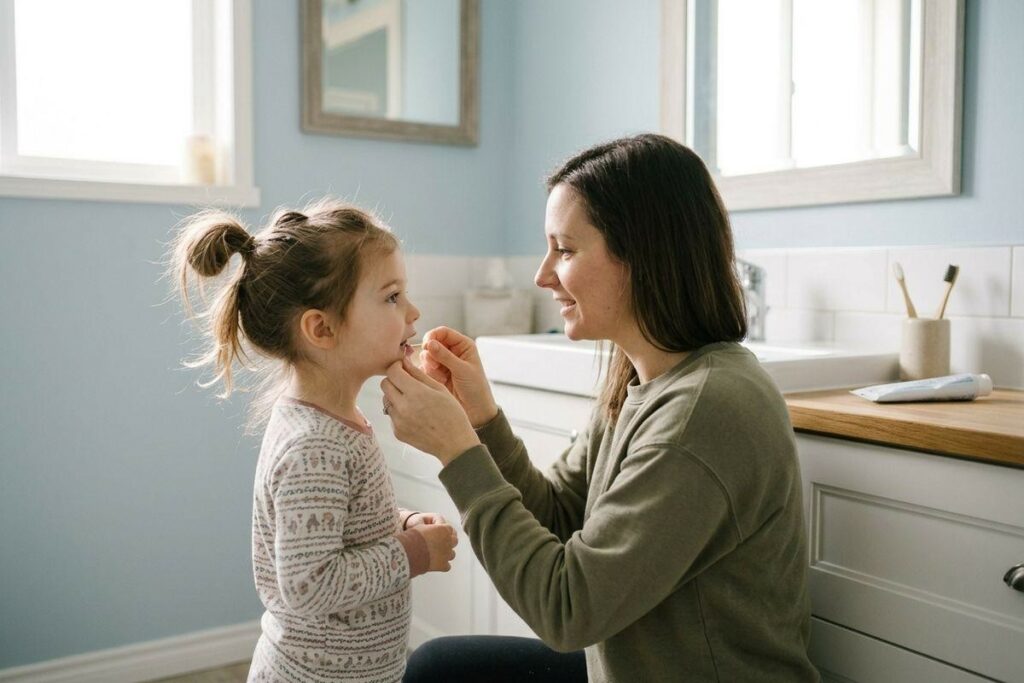
- Start flossing when two neighbouring teeth touch.
- You may need to floss for your child until age 10 or 11.
- Floss once each day with regular floss or a floss pick.
- Ask a dentist for help if gum pain or bleeding continues.
Genesis Dental helps families build healthy home-care habits. A toothbrush can clean the front, back, and top of each tooth. However, its bristles may miss plaque in the narrow spaces where your child’s teeth touch.
Yes, your child should floss once two neighbouring teeth touch. Daily flossing can help protect these close surfaces, support healthy gums, and keep your child’s breath fresh.
Why Floss Helps Your Child’s Smile
Plaque can collect between your child’s teeth, where a toothbrush can’t reach. Floss can help care for these tight spaces in several ways.
- Floss can remove plaque that your child’s toothbrush misses.
- It can help protect close tooth surfaces from decay.
- It can support healthy gums and fresher breath.
Floss also gives you a closer look at your child’s mouth. You may notice a sore spot, visible plaque, or an area that needs extra care during the daily routine.
At What Age Should You Floss Your Child’s Teeth?
Your child’s age offers a general guide, but tooth spacing matters more. Start when two neighbouring teeth touch. For many children, this happens around ages 2 to 3.
If your child has wide gaps between each tooth, floss may not be needed in those spaces yet. Your child’s dentist can check where the teeth touch and show you which areas need floss. As new teeth appear and the spaces change, your child’s routine may need to change too.
How to Floss Your Child’s Teeth Safely
Simple Floss Steps
Use slow, gentle movements. Snapping floss down can feel sharp against your child’s gums and may make the routine harder next time.
- Gently slide the floss between two touching teeth.
- Curve the floss into a C shape around each tooth.
- Move the floss below the gum edge with care.
Repeat these steps on both sides of every space. If your child feels sore, use lighter pressure and ask our team to check your technique.
Floss Tools for Children
- Choose waxed floss for an easier glide between close teeth.
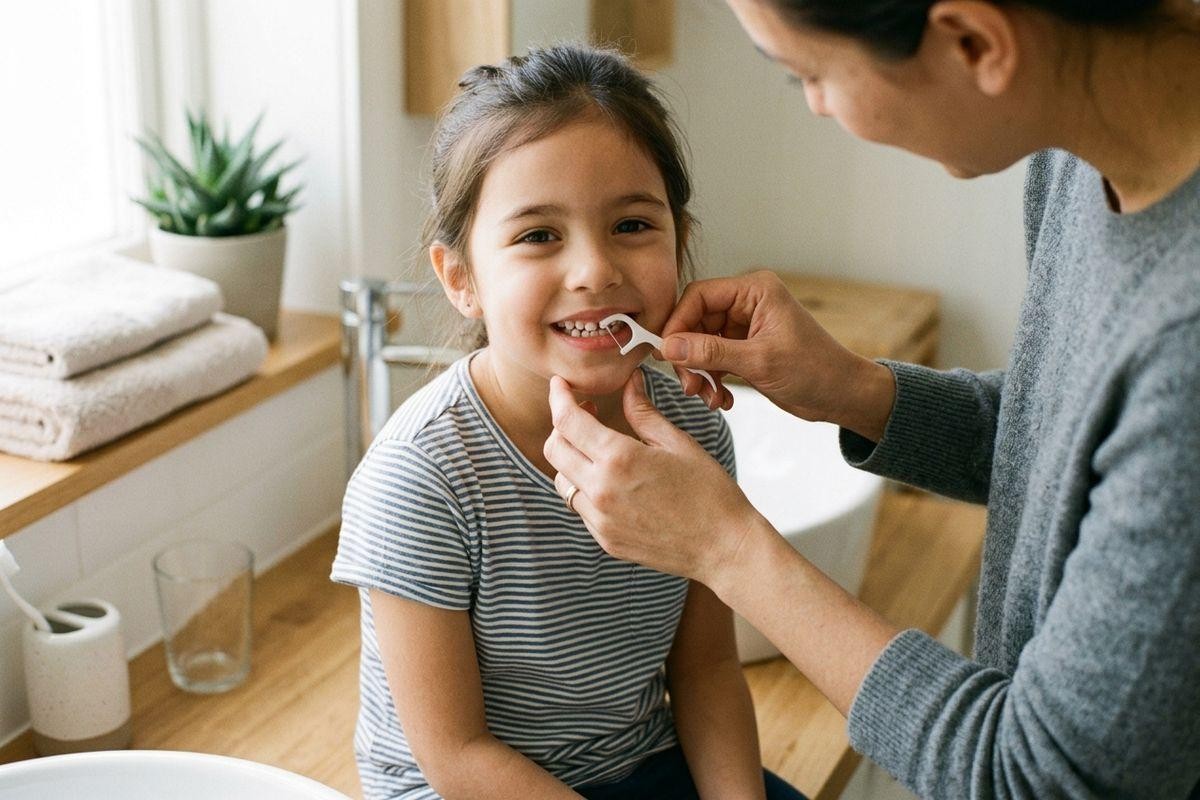
- Try floss picks if you want easier control in a small mouth.
- Use a water flosser as extra support rather than your only floss tool.
The right tool is the one you can use gently and with control. Your child’s dentist can suggest an option based on tooth spacing and comfort.
Daily Floss Habits & Parent Help
Your Role by Age
You’ll need to floss your younger child’s teeth because the task requires careful hand control. Around age 7, your child can start to practise, but you should still offer hands-on support and check each area.
Many children can take on more responsibility around age 10 or 11. Stay nearby until your child can reach every tooth and use the floss without snapping it against the gums.
Easy Routine Tips
- Floss your child’s teeth one time each day.
- Add floss to the bedtime routine beside the toothbrush.
- Let your child watch you set a calm, gentle example.
Keep the routine short and steady. A familiar order, such as floss, brush, and then choose a bedtime story, can help your child know what comes next.
When to Ask a Dentist for Help
Signs Your Child Needs a Dental Check
- Your child has gum pain or bleeding that continues.
- Your child has bad breath after regular home care.
- You can see plaque between your child’s teeth.
A dental visit can help you find areas that need more attention. The dentist can also check whether your child’s floss or floss pick fits comfortably between the teeth.
Your Child’s Dental Visit
Ask our team for a simple floss demonstration during your child’s visit. You can watch the hand position, learn how much pressure to use, and discuss plaque during a teeth cleaning appointment.
Genesis Dental supports families with routine dental care and practical home-care guidance. Our team can answer your questions and show you how to make flossing part of your child’s routine.
Contact our friendly team at Genesis Dental to book your child’s next visit.