

Key Takeaways
- Most low-risk adults may be advised to have bitewing x-rays every 1 to 2 years and a panoramic x-ray every 3 to 5 years.
- Children and teens may need x-rays more often than adults, especially if they have a higher risk of cavities or are in orthodontic treatment.
- Your oral health history, symptoms, age, and risk level all shape how often x-rays are recommended.
- Digital dental x-rays use low radiation, and your dentist only recommends imaging when there is a clear benefit.
- Tooth pain, swelling, sensitivity, dental trauma, or ongoing treatment may mean x-rays are needed sooner.
Why Dental X-Rays Matter for Your Oral Health
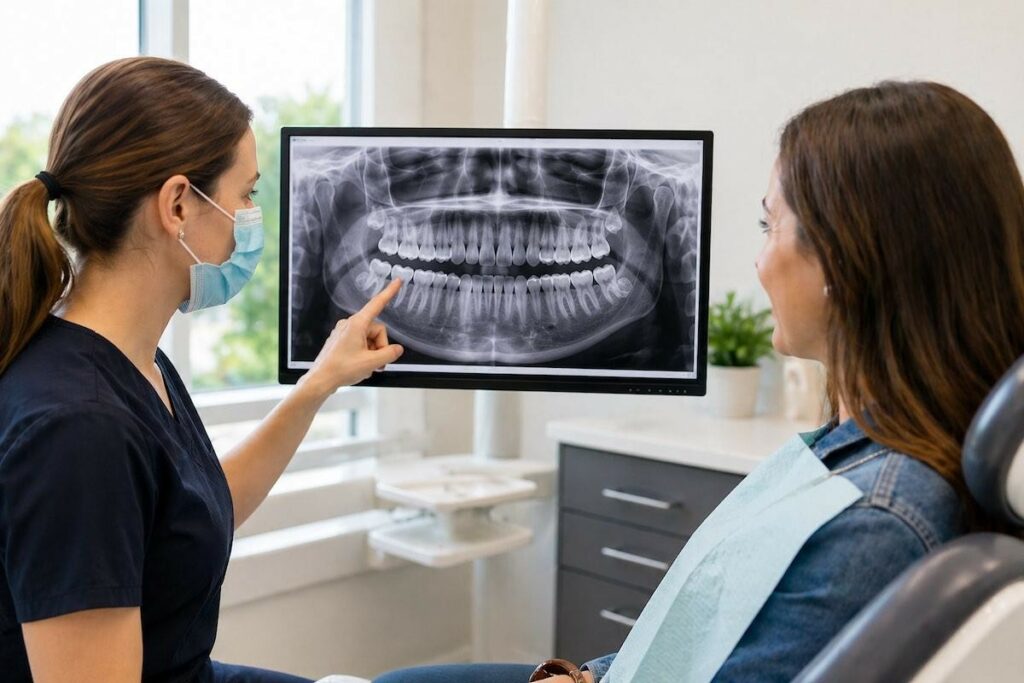
Dental x-rays help your dentist see problems that may not be visible during a regular exam, including cavities between teeth, issues beneath existing dental work, bone loss, infections, and concerns around tooth roots. Even if you brush and floss every day, some dental problems can develop quietly before they cause pain.
How often you need dental x-rays depends on your age, oral health history, cavity risk, gum health, and any symptoms you may be experiencing. For many low-risk adults who see a dentist regularly and have no signs of oral disease, bitewing x-rays may be recommended every 1 to 2 years and a panoramic x-ray every 3 to 5 years. Others may need imaging more often.
Your dentist uses these images to catch issues early, plan the right treatment, and keep a clear picture of what’s happening beneath the surface of your smile.
At Genesis Dental, x-rays are part of a full dental exam designed to give you a complete picture of your oral health.
The General X-Ray Schedule for Adults & Kids
Adults with Healthy Teeth
If your teeth and gums are healthy, you see your dentist regularly, and you are at low risk for cavities or gum disease, your dentist may recommend bitewing x-rays every 1 to 2 years as well as a panoramic x-ray every 3 to 5 years to check the roots of teeth and bone support. Your dentist will look at your full oral health history before deciding what makes sense for you.
Some people may go longer between x-rays, while others may need them a little more often. It all comes down to what your mouth actually needs.
Kids & Teens
Children’s teeth and jaws are still developing, so dentists may use x-rays to monitor tooth eruption, spacing, cavities, and growth patterns. Children with a higher risk of cavities may need x-rays more often, while children with a lower risk may need them less frequently. Your dentist will recommend imaging based on your child’s age, symptoms, cavity history, and what can be seen during their exam.
Keeping up with children’s oral health from an early age makes a real difference in how their teeth develop over time.
Teens or adults going through clear aligner treatment may also need imaging as part of treatment planning or progress monitoring. X-rays can help your dentist evaluate tooth roots, bone support, and other structures that aren’t visible in a digital scan alone.

Factors That Affect How Often You Need X-Rays
Your Risk Level Matters
If you’ve had cavities in the past, have a history of gum disease, or have had significant dental work done, your dentist may recommend x-rays more frequently. These factors mean that there’s more to monitor between visits.
Your daily habits also play a role. Regular flossing, consistent brushing, and a diet lower in sugar can help keep your risk level down, which may mean less frequent x-rays over time. Good oral health habits for adults go a long way in supporting good dental health.
When X-Rays May Be Needed Sooner
Tooth sensitivity, swelling, or pain that doesn’t have an obvious cause are all signs that your dentist may want to take a closer look at your mouth with an x-ray. Waiting for your next scheduled appointment isn’t always the right move when something feels off.
Ongoing treatments also call for more regular imaging. If you’re receiving dental implants or partway through an Invisalign treatment, x-rays may help the team track progress and make adjustments along the way.
Are Dental X-Rays Safe?
It’s natural to have questions about radiation. The short answer is that dental x-rays involve a very small amount of extra radiation. The Canadian Dental Association outlines how and when imaging should be used to protect people while still catching problems early.
Digital dental x-rays use low levels of radiation, and your dentist weighs the benefits before recommending imaging. At Genesis Dental, digital imaging technology is part of treatment planning, including digital x-rays for dental implants and Axeos CBCT 3D imaging for detailed views of the teeth, jaw, airway, and surrounding anatomy.
Dentists follow a safety principle called “as low as reasonably achievable,” meaning x-rays are only taken when there’s a clear reason to do so. Your health is always the priority behind that decision.
How to Know What’s Right for You
Your x-ray schedule is tailored to your dental situation, not based on a generic checklist. If you’re unsure where you stand, your next Surrey teeth cleaning or check-up is a good time to ask. Our team at Genesis Dental is happy to walk you through our recommendations for your smile and why we think they make sense.
Whether you’re due for a dental exam and cleaning in Surrey, experiencing tooth pain, or planning treatment such as dental implants or clear aligners, Genesis Dental can help you understand whether x-rays are recommended for your smile.
Book an appointment today to keep your oral health on track.

